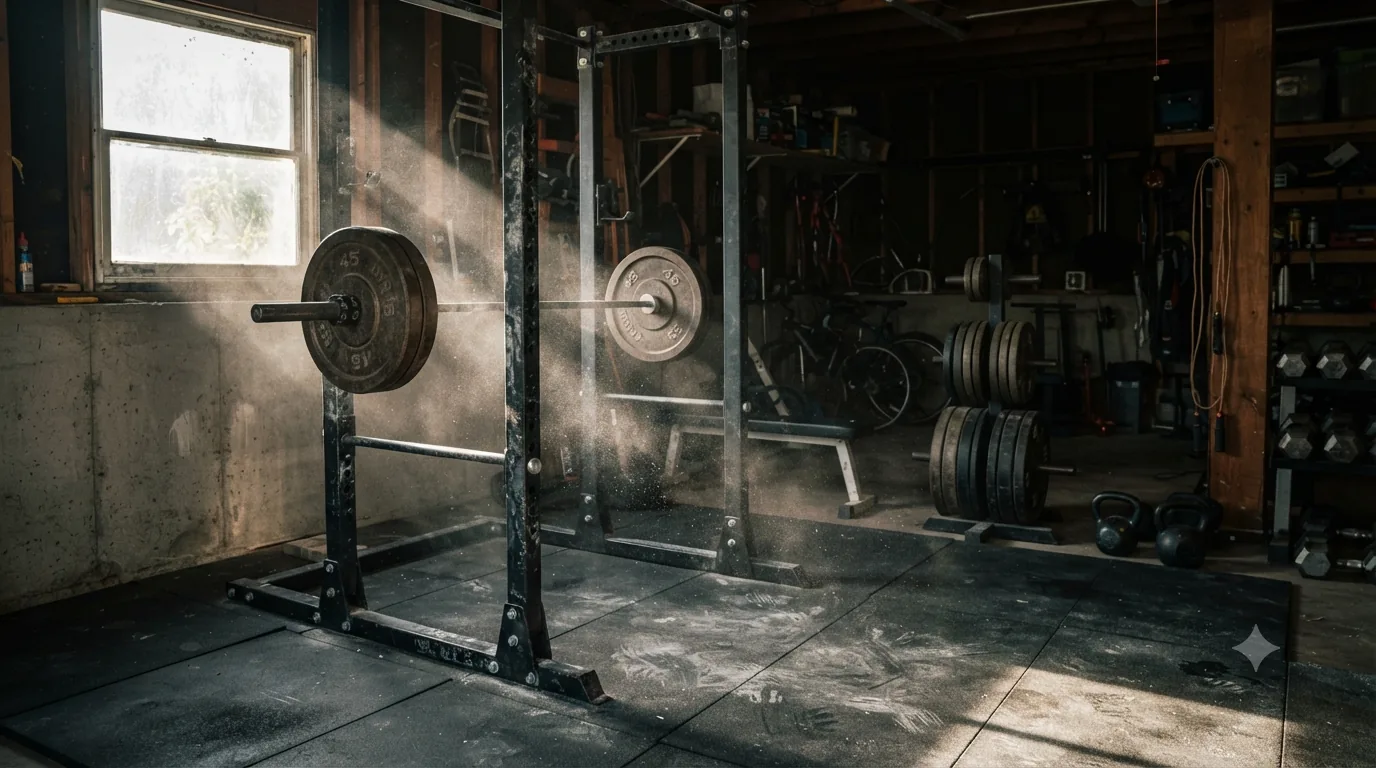
Home Gym Equipment, Decoded
Iron Lab decodes home gym and strength equipment by the specs that actually decide whether it lasts — barbell tensile strength (PSI), rack steel gauge (lower number = thicker steel), plate type and tolerance, bench pad width and weight rating, and flooring thickness by drop load — not the marketing on the box. We don't publish prices or star ratings, we make no injury or safety-outcome claims, and every guide names an honest caveat.
The home-gym market is doubling as buyers shift from cardio machines to barbells and racks — but "10,000 PSI" on a barbell box is a made-up number (real tensile strength runs 150,000-215,000+ PSI), "11-gauge" and "14-gauge" steel are marketed as if interchangeable when one is nearly twice as thick, and a "45lb" iron plate can legitimately weigh 44 or 46.5lb. Pick a topic below — each guide leads with the one spec that changes how you shop.
Barbells & Plates
Tensile strength, whip, knurling, and sleeve bearings decoded — plus why a plate's stated weight isn't exact.
Racks & Rigs
Steel gauge, upright size, and hardware diameter — the specs that actually predict a rack surviving max effort.
Weight Plates
Bumper vs iron vs urethane, drop-safety, and the accuracy tolerance nobody prints on the box.
Benches
Pad width, gap-vs-no-gap, and weight rating — what actually decides bench quality.
Dumbbells
The space-vs-cost math on adjustable vs fixed dumbbells, worked out plainly.
Flooring & Ceiling
Flooring thickness by drop load, and the ceiling-height math most buyers get wrong.
Start here — the first four things in a home gym
A home gym is a bar, something to put on it, something to rest it on, and a floor that survives it. Plate weight tolerance and bar knurling matter more than a brand name, and both are published specs. Each links to a live Amazon search rather than a fixed listing.
11 or 12-gauge steel, 2x3in or 3x3in uprights, 5/8in hardware
Best for:
Watch out:
Check price on AmazonNot deciding today? Add it to your cart over there — Amazon keeps it saved (and flags any price change) until you're ready.
150k+ PSI tensile strength, bushings or needle bearings, 28mm or 25mm shaft
Best for:
Watch out:
Check price on AmazonNot deciding today? Add it to your cart over there — Amazon keeps it saved (and flags any price change) until you're ready.
Check stud-mounting requirements and folded depth (often under 6in)
Best for:
Watch out:
Check price on AmazonNot deciding today? Add it to your cart over there — Amazon keeps it saved (and flags any price change) until you're ready.
450mm diameter standard, calibrated tolerance if pursuing a specific total
Best for:
Watch out:
Check price on AmazonNot deciding today? Add it to your cart over there — Amazon keeps it saved (and flags any price change) until you're ready.

Best-for answers
One buyer question per page, answered in the first sentence and backed by the spec that decides it.
Start here
How we work
We're a research-based site: we analyze manufacturer specifications, IWF/IPF standards references, and aggregated owner-feedback themes rather than physically testing every product. We explain tradeoffs plainly, always name a caveat, and report equipment specs — never injury or safety-outcome claims. Read our full methodology →